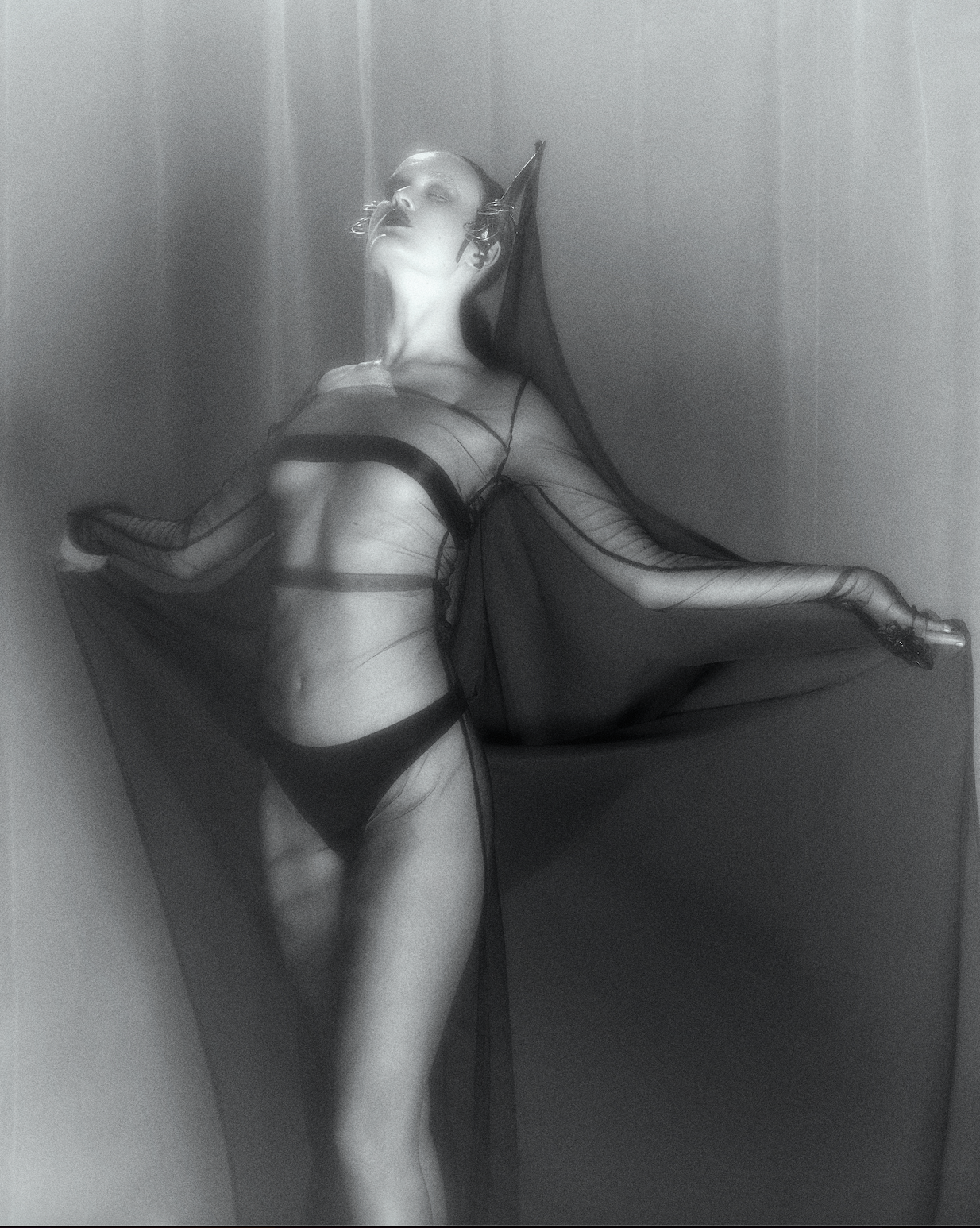
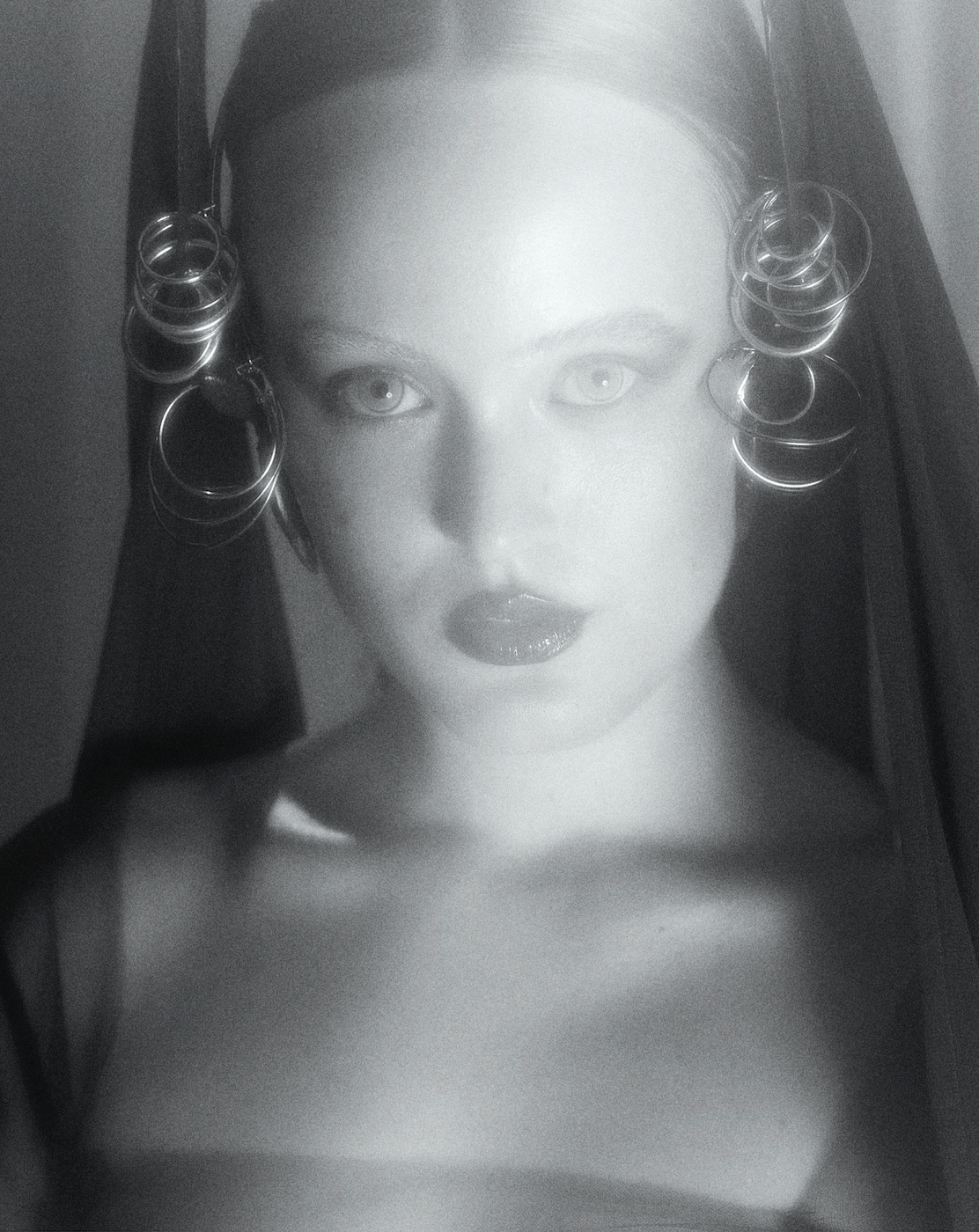
Child + the Banned
• Can you share the story behind the name CHILD + THE BANNED? How does it reflect your artistic vision?
I have always been terrified of growing up. I think it’s got something to do with people’s expectations – especially the expectations tied to becoming a woman; it can be so claustrophobic. I struggled with this a lot growing up and during adolescence. Yet somehow, childhood seemed like such a fearless state of being to me. And when I felt the most lost in my life, remembering the fearless energy I’d always had as a child helped me navigate who I was becoming as I grew.
Of course, when a phoniatrics specialist later concluded that my voice was “stuck in a state of puberty”, my artist name came to have a whole other layer to it. I was already gigging with the band as CHILD + THE BANNED; a reference to my obsession with the childlike liberated state of being and to all the banned emotions and demons, which I only in music find the space to express. The moment I found out about the biologically abnormal development of my voice, it was like a prophecy coming true.
• Growing up in Copenhagen and living in London, what role did your environment play in shaping your music and creativity?
I grew up by the sea, north of Copenhagen, in quite a small, protected sphere. I was very ill and taken out of school in early adolescence, which contributed even further to the sense of secludedness that I felt. I was often on my own. I only had a few friends and hardly any kindred spirits. So I spent a lot of time writing songs on my piano. Even when my classmates started partying and chasing romances, I’d be deeply buried in Patti Smith literature; very much inspired by her legendary memoir ‘Just Kids’, I remember having this distinct feeling that there must be another galaxy where my like-minded peers were waiting for me; I just needed to go out into the world and share who I really was. Just like Smith went to New York and became best friends with Robert Mapplethorpe, I would go somewhere and form these special bonds through music, art and creativity. In that sense, London became my version of her 70s New York.
London is in many ways an antidote to Copenhagen. It’s dirtier. And louder. And you are left to your own device if something goes wrong. It’s always diverse, different and creative (and yet, it’s almost impossible to survive here as a creative unless you come from money, or you work and hustle 24/7 –– I belong to the latter of the two, I’m afraid). When I moved, I did not know a soul. But I never felt alone. Everytime I’d go out of the door, I’d be in Disneyland and felt anything could happen, for possibilities were endless. In London, there are always so many people to meet, so many stories to uncover. There is so much space here to be yourself –– and I probably feel embraced for who I am in a way I never quite felt when I was in Denmark.
The sensibilities of both places – of London and of Copenhagen – run through my music. I hear their influences distinctively. The sounds of the sea, of water, of the overgrown garden guarded by a tapestry of wild ivy; the sound of naivety and secludedness and sometimes loneliness; that’s the sentiment of my upbringing. However, the gritty beats, the curiosity, the wildness, thirst and sensuality; those elements speak to the person I became as I blossomed in London. I am as suspended between the two, in my mind and in my music and in my lyrics.
• Your voice has been described as “stuck in a state of puberty.” How has this rare vocal quality shaped your artistic identity and sound?
I have a very high range. My vocal folds are quite long and thin, spaced apart from one another –– not fleshy and sitting close together, as most often is the case for girls in teenage years and above. I believe I’ve expanded my lower range recently, too, though. It helped when I accepted that my voice was just different; that a lot of things normal voices do easily are really hard for me; and vice versa, my voice can do things that are way out of reach for other vocalists. Somehow, accepting your voice as it is, goes hand in hand with truly knowing yourself as an artist: You can only sing with your own voice, there’s no other way to be true. It’s definitely a challenge during those years when you just want to sound like everybody else. But, at some point, you realise being different is the best gift serendipity could ever have granted you.
• Your music has been described as “little reveries unveiling your dramatic perception of a hazy world.” Can you expand on what this means to you?
I am a super emotional and sensitive and, arguably, dramatic person. I only have big emotions. It’s always been like that. The world is confusing to me but in my music, I get to somehow make order of the chaos – even if that order is in fact a crazy mess, at least the process gives me clarity and enables me to process what is happening around me and inside me. And subsequently, I throw my curiosity upon something new.
• CHILD + THE BANNED has performed at an incredible array of venues, from fashion shows to renowned museums. What’s been the most memorable performance so far, and why?
Every performance gives you something different. A new audience. A new energy. A new place. A new challenge. Live performance is so potent and so real. The connection you have with the people in the room is crucial and changes everything. I love the collaborative performances I’ve been so lucky to do, for instance with Michaela (Stark) in Milan or at SHOWstudio, curated by Nick Knight. I love being a part of a team, who –– in the name of creative divinity –– throw all their force into creating a shared moment of beauty, or horror, or both. Every time you connect with a collaborator, it’s as if two different breeds of aliens are meeting one another on a faraway planet, intertwining their tentacles and realising they, for some incredible reason, understand each other’s strange languages. I love that!